Slow-Cooker Beef, Barley and Root Vegetable Stew

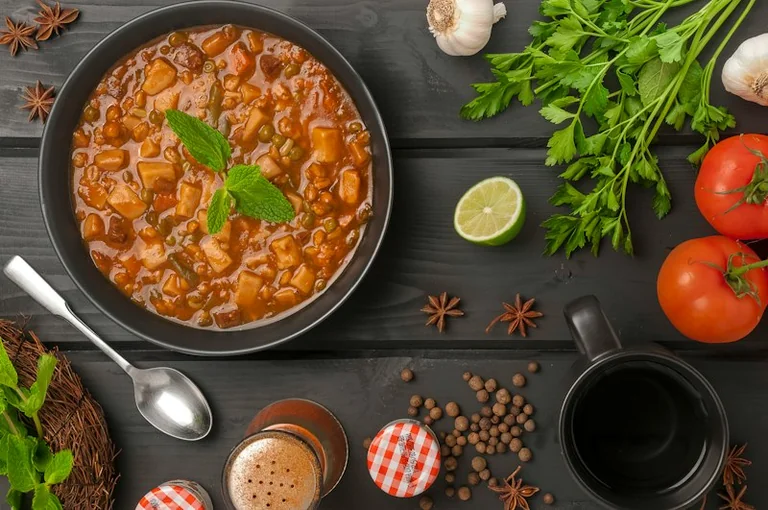
A slow cooker turns beef, pearl barley, carrots and onions into a filling, make-ahead stew with little hands-on work. This recipe makes six portions; browning the beef first adds flavor, but you can skip that step when time is short. Cooking time varies with the appliance, the size of the beef pieces and how full the cooker is, so check tenderness before serving.
Ingredients for six servings
- 2 pounds (900 g) beef chuck or stewing beef, cut into roughly 1-inch cubes
- ⅔ cup (130 g) pearl barley, rinsed
- 3 medium carrots, cut into thick slices
- 1 large onion, diced
- 2 celery stalks, sliced
- 2 tablespoons tomato paste
- 4 cups (950 ml) low-sodium beef stock, plus a little more if needed
- 1 teaspoon dried thyme
- 1 bay leaf
- 1 tablespoon neutral oil, for browning (optional)
- Salt and black pepper
- Chopped parsley, to serve (optional)
How to make the stew
- Brown the beef if you have time. Pat the beef dry and season it with salt and pepper. Heat the oil in a skillet and brown the beef in batches, turning to color several sides. Transfer it to the slow cooker. Skip this step for a simpler preparation; the stew will still cook through.
- Add the vegetables and barley. Put the carrots, onion, celery, rinsed pearl barley, tomato paste, thyme and bay leaf in the cooker. Pour in the stock and stir gently. The ingredients should be surrounded by liquid, but need not be fully submerged.
- Cook until the beef is tender. Cover and cook on Low for about 8–9 hours or High for about 4–5 hours. These are starting ranges, not guarantees: slow cookers vary, and smaller beef pieces can finish sooner. Check that the beef is fork-tender and the barley is soft but pleasantly chewy. If either needs more time, continue cooking and check again.
- Adjust the consistency. Remove the bay leaf. If the stew is thicker than you like, stir in hot stock a little at a time. If it is thinner, uncover for a short period if your appliance instructions allow, or let it stand briefly; barley will continue absorbing liquid as it rests. Taste and adjust the seasoning.
- Serve. Ladle into bowls and add parsley if desired. For a brighter finish, offer a little black pepper or a squeeze of lemon at the table.
Get the liquid and barley texture right
Pearl barley absorbs liquid as it cooks and thickens the stew further while it rests. This recipe starts with ⅔ cup barley to 4 cups stock, a ratio that leaves room for the beef and vegetables to release moisture. Avoid adding extra barley casually: too much can make the stew very thick or leave the grains undercooked if the liquid runs short.
For a brothier result, have warm stock ready to stir in before serving. For a thicker bowl, let the stew stand covered for 10–15 minutes after cooking. Pearl barley contains gluten, so it is not suitable for a gluten-free meal; use a gluten-free grain such as rice and follow its cooking directions instead.
Make-ahead, cooling and reheating
Cool leftovers promptly and divide a large batch into shallow containers so it cools more quickly. Refrigerate within two hours of cooking, and keep the refrigerator at 40°F (4°C) or colder. Use refrigerated leftovers within 3–4 days, or freeze them for longer storage. Barley continues to absorb broth, so add a splash of stock or water when reheating.
Reheat only the portion you plan to eat, on the stovetop or in the microwave, stirring as needed until it reaches 165°F (74°C) throughout. Bring stovetop portions to a steady simmer. Thaw frozen portions in the refrigerator when possible, and avoid reheating the same batch repeatedly.
Pressure-cooker and vegetarian variations
For a pressure cooker, brown the beef using the sauté function if desired, then add the vegetables, barley, seasonings and stock. Use the appliance’s stew or pressure-cook guidance for beef and barley, and allow for the cooker’s required liquid and release instructions. Timing varies by model and by beef piece size; check tenderness after pressure has fully released, then cook longer if needed. Do not fill above the cooker’s maximum line, and follow its manual for foods that expand, such as barley.
For a vegetarian version, replace the beef with mushrooms, canned beans or a mix of both, and use vegetable stock. Add canned beans near the end so they hold their shape. Mushrooms can be browned first for deeper flavor. Check the barley for tenderness and add liquid as needed; the vegetables and barley may finish sooner than beef.
Recipe safety note
Keep raw beef separate from ready-to-eat ingredients, and wash hands and utensils after handling it. A slow cooker should be used according to its manufacturer’s instructions, with the lid kept on during cooking. Do not use a delayed start if ingredients that need refrigeration would sit at room temperature. Cool, refrigerate and reheat leftovers promptly as described above.
Source: Editorial research
Context & actions About this article
Source check Cooking method
Cooking ranges are guides because slow cookers, beef cuts and piece sizes differ; check tenderness and follow your appliance manual.
- Check that the beef is fork-tender before serving.
- Check pearl barley for a soft, chewy texture.
- Follow the cooker manual for liquid, filling and pressure-release instructions.
- Cool leftovers promptly and reheat them to 165°F (74°C).
- Scope
- International
- Updated
- 2026-10-22 10:30
Source check
Report a trust issue
Send a clear signal to community moderation if the source, facts or context need review.


Comments