How the Great Fire of London Reshaped the City

The Great Fire of London began on 2 September 1666 in Pudding Lane and burned for several days, destroying much of the City of London. The rebuilding that followed changed how buildings were constructed and fire risk was addressed, while the City’s familiar street pattern largely endured. The Museum of London’s historical account traces the fire’s course and the choices made in its aftermath.
2 September: a fire starts in Pudding Lane
The fire began in a bakery on Pudding Lane, in the eastern part of the City. London’s tightly packed buildings, many made with timber and projecting upper floors, stood close together. In dry conditions, a fire could spread quickly from one structure to the next. That urban form helps explain why an outbreak in one building became a disaster across a large part of the City.
The familiar origin story is often repeated with vivid details, but the broad historical account is clearer than every anecdote attached to it. The fire’s starting point and devastating course are established; individual stories should be treated with care unless supported by evidence. Keeping that distinction in view helps separate the documented sequence from later retellings.
Over several days, the flames cross the City
As the fire spread through streets and buildings, the density of the built environment and the difficulty of stopping a fast-moving blaze compounded the danger. Narrow streets and closely spaced houses left little separation between buildings, allowing flames to move through connected parts of the cityscape.
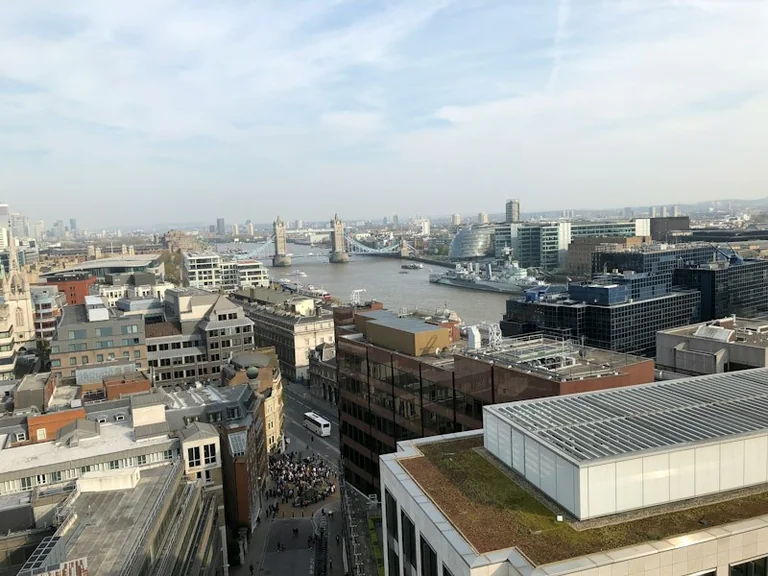
People fled with what they could carry, while officials and residents tried to contain the blaze. Contemporary accounts describe a crisis that disrupted ordinary life across the City. The event is remembered as a major urban disaster, though exact totals and details can vary across historical summaries. The broad pattern is clear even where individual accounts differ: the fire moved beyond its starting point and left a wide area needing reconstruction.
Rebuilding had to work around the old city
Once the fire had passed, London faced the practical task of replacing homes, businesses and public buildings across a wide area. Rebuilding was not simply a matter of restoring what had stood before. The disaster prompted plans and arguments about how the City should be laid out and constructed, raising the possibility of a more regular street plan.
Those ambitions met practical limits. Existing property boundaries and the need to rebuild quickly constrained how far the old street pattern could be replaced. The result was a recovery shaped by both change and continuity: streets and plots remained familiar in many places even as buildings and construction practices changed. For Londoners, this meant that the fire’s effect on the map was less a wholesale redesign than a new built environment fitted into much of the existing layout.

Construction rules made fire risk part of the legacy
The rebuilding period made materials and building rules central to public safety. Greater use of brick and stone, alongside restrictions on combustible construction, helped reduce the risk that future fires would spread in the same way. These measures addressed vulnerabilities exposed by the fire: closely packed buildings and construction that could help flames pass from one structure to another.
The change was not a promise that urban fires would disappear. Instead, the disaster became a lasting reference point in discussions about building standards and urban resilience. In the rebuilt City, safety increasingly formed part of decisions about how buildings were made, alongside the urgent need to restore homes and trade.
The City’s reconstruction is the next milestone
The Great Fire’s immediate chronology ends with the blaze being brought under control after several days. Its longer history lies in the reconstruction that followed: proposals for streets, the constraints imposed by existing plots, and changes to materials and safety rules shaped the City’s development for generations. The Museum of London’s historical account provides a starting point for following that sequence from Pudding Lane to the rebuilt streets.
Source: Museum of London
Context & actions About this article
Source check Historical context
This explainer follows the Museum of London’s account of the fire’s origins, course and effects, while treating familiar anecdotes cautiously.
- The fire began in Pudding Lane on 2 September 1666
- The blaze destroyed a large part of the City
- Rebuilding affected construction and fire safety
- Source
- Museum of London
- Scope
- City of London, England
- Updated
- 2026-10-20 08:36
Source check
Report a trust issue
Send a clear signal to community moderation if the source, facts or context need review.



Comments